About
What's this project about?
We are reviewing Clarence’s Dog Management Policy to make sure our rules and public spaces work well for everyone, including dog owners, non-dog owners and wildlife. This review is about setting clear expectations for responsible dog ownership, improving safety and amenity in shared places, and protecting natural areas.
The current policy was adopted in 2021 and is reviewed every five years. We know our community cares deeply about dogs and the places we all use. Changes to dog access can be a sensitive topic. To make sure decisions are community-informed, we will listen to your views, test options, and use what we hear to refine the draft policy and the final recommendation to Councillors.
To learn more about the policy review, check out the "Background" tab.
What can be influenced?
Your feedback will help us to:
- set priorities for dog access rules across our parks, beaches and tracks (within the Dog Control Act 2000 )
- identify what is and isn't working well in our Dog Exercise Areas and tell us what upgrades should be prioritised
- reduce impacts in shared spaces and prioritise improvements like bins, signage, education and responsible ownership
- improve how nuisance and behaviour issues are handled including complaint pathways and support for owners
- guide balanced local setting of fees, concessions and kennel licensing processes
- strengthen how compliance works on the ground including registration, microchipping, enforcement and incident processes.
The feedback provided here and via submissions will be used to draft the new Dog Management Policy review.
What can't be influenced?
Some things are outside the scope of this engagement, including:
- changing state law. We must follow the Dog Control Act 2000 and can’t override it
- removing legal restrictions in certain places. Some places must stay restricted or dog-prohibited for safety or environmental protection
- changing assistance animal rights and protections. Legislated rights and protections for assistance animals are not open for change
- making decisions on land we do not manage. Where the State, the Crown, or other land managers are responsible, we can’t change access rules
- guide fairer local settings for fees, concessions and kennel licensing processes
- commitments beyond practical resourcing. Changes must fit within our governance process and available budgets, staffing and maintenance capacity.
While we can’t solve every community concern or issue, where something sits outside our direct control, we will endeavour to advocate, partner with the right organisations, or support community-led action to help make progress.
Timeline
Timeline
-
Timeline item 1 - active
Phase 1 Community Engagement
March to June 2026
The engagement runs from 23 March to 13 June 2026 to gather feedback on dog management in Clarence, including shared spaces, safety, nuisance behaviour, wildlife impacts, education and fair enforcement.
-
Timeline item 2 - incomplete
Analysis and review
Mid-2026
The team will analyse and review the data from our Phase 1 community engagement and write a draft Dog Management Policy.
-
Timeline item 3 - incomplete
Phase 2 Community Engagement
Late-2026
The team will return back to the community for feedback on the draft Dog Management Policy.
-
Timeline item 4 - incomplete
Review and finalise
Late 2026 / Early 2027
The team will analyse and review the data from our Phase 2 community engagement about the draft policy and finalise the Dog Management Policy.
-
Timeline item 5 - incomplete
Adoption
2027
The team will present the finalised Dog Management Policy to Councillors for adoption.
Background
What is the Dog Management Policy?
The Dog Management Policy sets out how dogs and people can share public spaces safely and respectfully in Clarence. It guides things like where dogs can and cannot go, when they need to be on lead, expectations for responsible ownership, and how we manage safety, amenity and impacts on natural areas.
 Why are we reviewing it now?
The current Dog Management Policy 2021 must be reviewed every five years. With changing demographics, evolving dog ownership trends, and updated best practice, this review is timely to address current challenges and plan for future needs, including community safety, environmental protection, equitable access, and responsible ownership.
What guides dog management in Tasmania and Clarence?
The Dog Control Act 2000 provides the legislative framework for managing dogs in Tasmania. It outlines owner responsibilities and enables us to enforce compliance. Our local policy sits within this framework and helps translate it into clear expectations and local approaches for Clarence.
What we learned last time
The 2021 review showed strong community interest and concern, particularly around off-lead access. It generated more than 3,000 submissions. We extended engagement and revised the draft policy to maintain off-lead access at key locations. We are taking these lessons into this review, including the need to be transparent, inclusive, and to avoid a process that is dominated by one group or one issue.
Who the policy affects
Dog management affects everyone, not just dog owners. This review is an opportunity for constructive input from dog owners and non-owners, recreational users, environmental advocates, and other public space users, so the policy reflects whole-of-community values and needs.
What we are considering in this review
We will be asking about the full range of dog management issues, including:
Where dogs can be off-lead, on-lead, or not permitted. We want to understand what is and isn't working well, and where boundaries or signage need to change. We also want to know your thoughts on the use of ovals as Dog Exercise Areas when they aren't being used for sport.
How we reduce dog waste in shared places. We want to know where waste is a problem, whether bins and signs are in the right places, and what would make it easier for people to do the right thing.
How licences work, including for households keeping multiple dogs. We want to understand how the current approach affects owners and neighbours, and what would make the process balanced and clearer.
How we support people to register and keep microchip details up to date. We want to learn what helps or gets in the way of compliance, and how we can make the process simpler and more accurate.
Animal registration and microchipping is a requirement under the Act, however the way we process registrations can be reviewed to ensure a system that is accessible for all of our community. We want to know how we can support people to register and keep microchip details up to date.
Everyday expectations like effective control, on-lead where required, and being considerate in shared spaces. We want to know what people think responsible ownership looks like in practice, and what information or education would help.
How barking and behaviour concerns are handled, including what feels balanced for both the person impacted and the owner. We want to understand common problem areas, how well the current process works, and what support would help prevent issues escalating.
How serious incidents are responded to under the Act, including reporting, investigation, and controls for higher-risk dogs. We want to know what people need to feel safe and confident in how incidents are managed.
How rules are applied in practice. We want to learn where people see inconsistent behaviour, what feels proportionate, and how enforcement can be clearer and more balanced.
How we balance dog access with protecting wildlife, dunes, wetlands and other sensitive places. We want to understand where protection needs to be stronger, and how the community views the trade-offs between access and biodiversity.
The evidence we will use
Alongside what we hear from the community, we will use local data and trends from recent years to understand what is working and what needs improvement. This includes looking at trends in dog ownership, registration rates, nuisance complaints, and dog attacks. We will use this to set clear performance measures for the updated policy.
 How we will engage
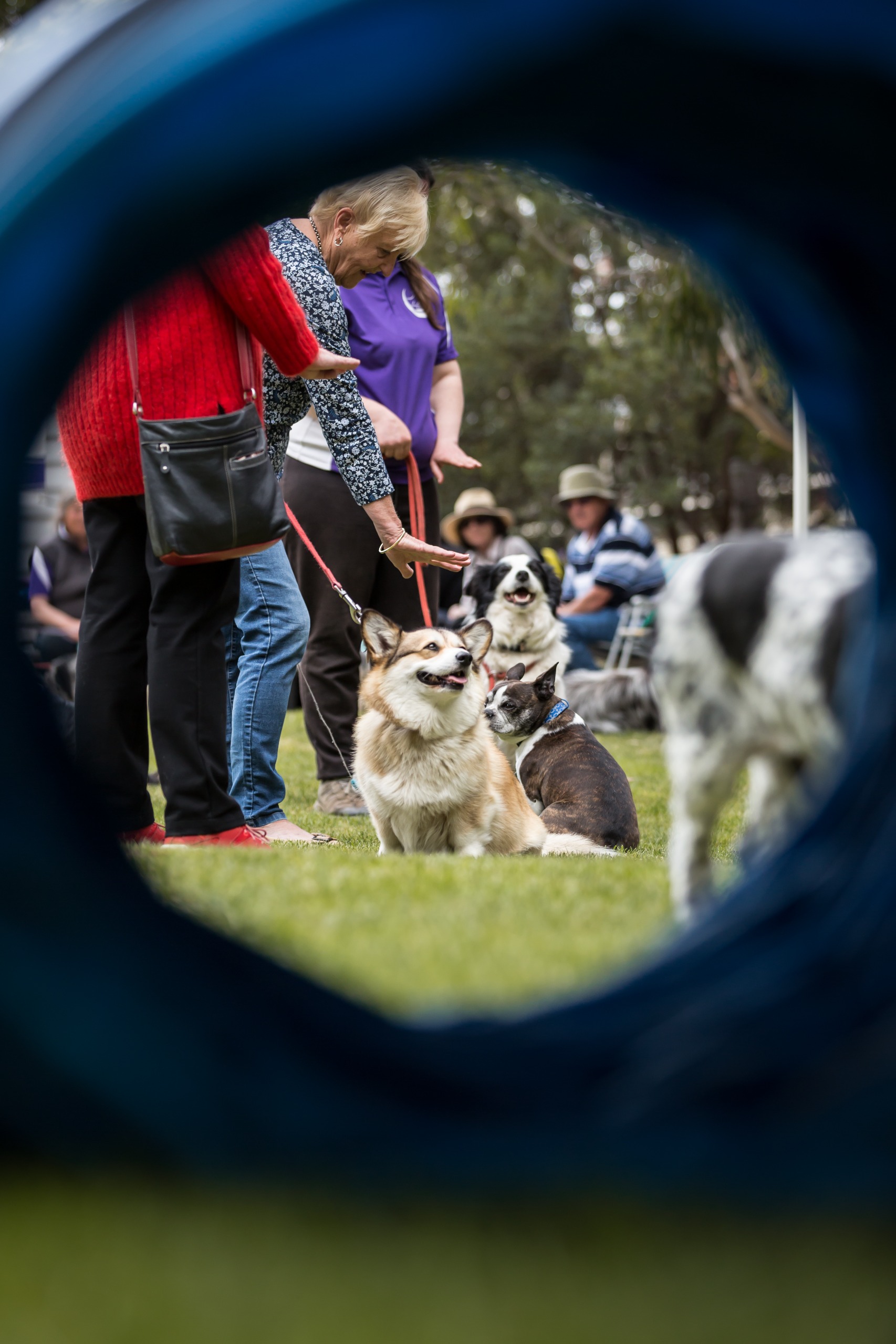
This is a whole-of-community engagement. You can take part in a variety of ways, including: an online survey and pop-up sessions at places like Dog Exercise Areas, markets, events, and shopping areas.
We will also share updates, FAQs and summaries so you can see what we are hearing and how it is shaping the draft policy. To stay up to date, create a Your Say account today and follow this project.
What happens next
Feedback from the early engagement will help shape a draft policy. The draft will then be released for public comment before a final recommendation is made. Depending on what we hear, outcomes may range from minor amendments to a full redraft, with the next policy intended to be finalised in early 2027.
Your feedback will help us to:
- set priorities for dog access rules across our parks, beaches and tracks (within the Dog Control Act 2000 )
- identify what is and isn't working well in our Dog Exercise Areas and tell us what upgrades should be prioritised
- reduce impacts in shared spaces and prioritise improvements like bins, signage, education and responsible ownership
- improve how nuisance and behaviour issues are handled including complaint pathways and support for owners
- guide balanced local setting of fees, concessions and kennel licensing processes
- strengthen how compliance works on the ground including registration, microchipping, enforcement and incident processes.
The feedback provided here and via submissions will be used to draft the new Dog Management Policy review.
Some things are outside the scope of this engagement, including:
- changing state law. We must follow the Dog Control Act 2000 and can’t override it.
- removing legal restrictions in certain places. Some places must stay restricted or dog-prohibited for safety or environmental protection.
- changing assistance animal rights and protections. Legislated rights and protections for assistance animals are not open for change.
- making decisions on land we do not manage. Where the State, the Crown, or other land managers are responsible, we can’t change access rules.
- guide fairer local settings for fees, concessions and kennel licensing processes
- commitments beyond practical resourcing. Changes must fit within our governance process and available budgets, staffing and maintenance capacity.
While we can’t solve every community concern or issue, where something sits outside our direct control, we will endeavour to advocate, partner with the right organisations, or support community-led action to help make progress.
Documents
Document Library
There are a few documents and acts that are relevant to our Dog Management Policy, including:
- the Dog Management Policy 2021
- the Dog Control Act 2000
- Animal Welfare Act 1993
- Local Government (Rates and Charges) Remissions Act 1991.
Definitions
| Dog Control Act 2000 | Tasmanian (state) legislation regulating the control and management of dogs. |
| Animal Welfare Act 1993 | Tasmanian (state) legislation that sets minimum standards of care and prescribes animal welfare offences for all animals, including dogs. |
| Local Government (Rates and Charges) Remissions Act 1991 | Tasmanian (state) legislation that regulates concessions and remissions on rates and charges; referenced in this Policy regarding pensioner concessions. |
| Council | The elected members (the Councillors) of the City of Clarence. |
| City of Clarence | The organisation responsible for administering City of Clarence functions and services. |
| Policy | City of Clarence Dog Management Policy 2021. |
| Natural Area | A location that contains significant ecological, environmental or biodiversity assets. In this Policy, references to natural areas include bushland reserves, grasslands, saltmarshes and other non‑woody ecosystems. |
| Reserve Management Plan (was Reserve Activity Plan) | A long-term management strategy for a specific reserve or natural area. |
| Shared Use Area | A track, trail, pathway or similar area intended for shared use by pedestrians and cyclists. |
| Road Related Area | For the purposes of this Policy, includes any footpath or track designed for use by cyclists or pedestrians adjacent to a road. |
| Foreshore | An area covered by sea at high tide but not at low tide. |
| Ranger Services | City of Clarence’s authorised officers responsible for animal management and enforcement of dog control within the municipal area, including patrols, responding to complaints, and lost/found animals. |
| Effective Control | As defined under section 4 of the Act: Effective control Off-lead: your dog must be close to you and in sight at all times and respond to your commands, and in particular should come to you when called. On-lead: your dog must be held on a lead not more than two metres long by a person able to control the dog. |
| Desexing | To render a dog permanently incapable of reproduction. |
| Microchipping | Implanting an approved microchip in a dog for permanent identification. |
| Entire Dog | A dog that has not been desexed. |
| Guard Dog | A dog used to guard premises that the owner does not reside in. |
| Dangerous Dog | A dog declared dangerous by City of Clarence that has caused or is likely to cause serious injury. |
| Working Dog | A dog used principally for droving or tending livestock. |
| Kennel License | A permit issued by City of Clarence that allows individuals or businesses to operate a kennel, which is a facility that houses more than two dogs for purposes such as breeding or training. |
FAQs
FAQs
Have your say!
Your feedback will help us understand what’s working with dog rules and shared spaces in Clarence, what causes problems (like safety, conflicts in busy areas, accessibility, nuisance behaviour, or impacts on wildlife), and where changes would make the biggest difference through clearer rules, better facilities, education and fair enforcement.
Please take the survey or send a written submission to yoursay@ccc.tas.gov.au .
Want all the latest updates on this project?
Follow today and get updates straight to your inbox!