About
What's this project about?
We’re putting together a master plan for Clifton Beach to guide how the area grows and improves over time. It will help us plan and prioritise future upgrades so Clifton Beach stays a great place to swim, walk, surf, meet up and spend time, while also looking after the dunes and coastal environment.
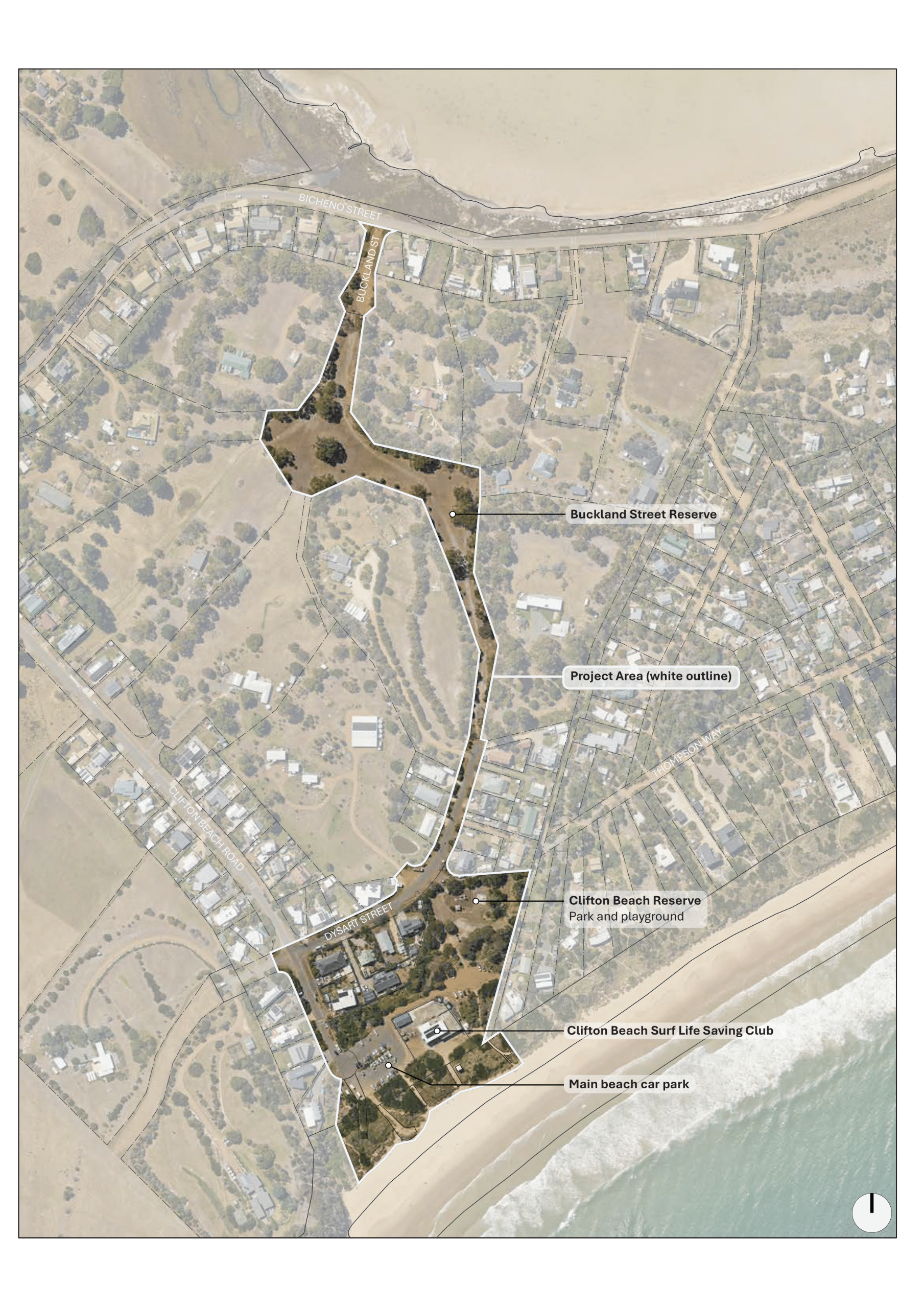
Clifton Beach is one of Clarence’s busiest beach spots, especially over summer and during surf lifesaving events. People use this area in different ways, and we know there are parts that are outdated or don’t work well, especially when busy. The master plan area focuses on the public and recreational spaces in the Clifton Beach township, including the main beach car park, beach access points through the dunes, the local play park and reserve, and the streets around the beach, including Dysart Street and the south end of Clifton Beach Road. See the maps in the “Background” tab for details of the project area.
We want to hear what you value most about Clifton Beach, what needs attention, and what trade-offs you’re willing to accept. We’ll use your input alongside technical advice (including coastal hazards and land requirements) to shape a draft Clifton Beach Master Plan and the recommendations that go to Councillors.
Timeline
Timeline
-
Timeline item 1 - active
Phase 1 Community Engagement
February to March 2026
The engagement runs from 5 February to 22 March 2026 to gather ideas on what the community envisions for Clifton's future.
Come along to a community pop-up and learn more!
- 14 Feb - 2026 Tasmanian Junior Statewide Carnival @ Clifton Beach SLSC from 9am-12pm
- 27 Feb - Friday Night Food Van and Bar @ Clifton Beach SLSC from 4:30pm - 7pm
-
Timeline item 2 - incomplete
Analysis, mapping, and design
Anticipated completion Mid-2026
The team will analyse the information from Phase 1 and design the draft Clifton Beach Master Plan.
-
Timeline item 3 - incomplete
Phase 2 Community Engagement
Anticipated late 2026
The team will return to the community with the draft Clifton Beach Master Plan to see if we've got it right.
-
Timeline item 4 - incomplete
Review and finalise
Anticipated late 2026
The team will review community feedback and finalise the master plan.
-
Timeline item 5 - incomplete
Adoption
Anticipated 2027
The team will present the finalised master plan to Councillors for adoption.
Background
Clifton Beach is Clarence’s primary open beach destination and home to the Clifton Beach Surf Life Saving Club (SLSC). While the local population is small, the beach attracts thousands of visitors each year, especially over summer and during surf lifesaving events.
We manage the surrounding public land, access points and facilities that support day-to-day use and peak season crowds. This includes the main beach car park, playspace and picnic areas, public toilets and showers, paths, and adjoining reserves.
Why we’re doing a master plan now
Much of our existing infrastructure is ageing and no longer meeting contemporary expectations for a busy coastal destination. Past works have often been reactive or done piece by piece, which can make spaces feel disconnected, with inefficient access and poor pedestrian connections across the area.
Renewal works are anticipated in coming years, including upgrades to public toilets, car parking, stormwater infrastructure, beach access, and recreation facilities. The master plan will help make sure these upgrades are coordinated, well designed, and done in a way that makes sense. The master plan is also needed to help coordinate improvements across the public area, alongside the Surf Club’s planned upgrades.
To learn more about the master plan process, click here or go to the "Master Plans" tab.
Where is the master plan area?
The plan focuses on the Clifton Beach area, including the main beach car park, beach access points through the dunes, the local play park and reserve, and the streets around the beach, including Dysart Street and the south end of Clifton Beach Road.
Who owns and manages the land?
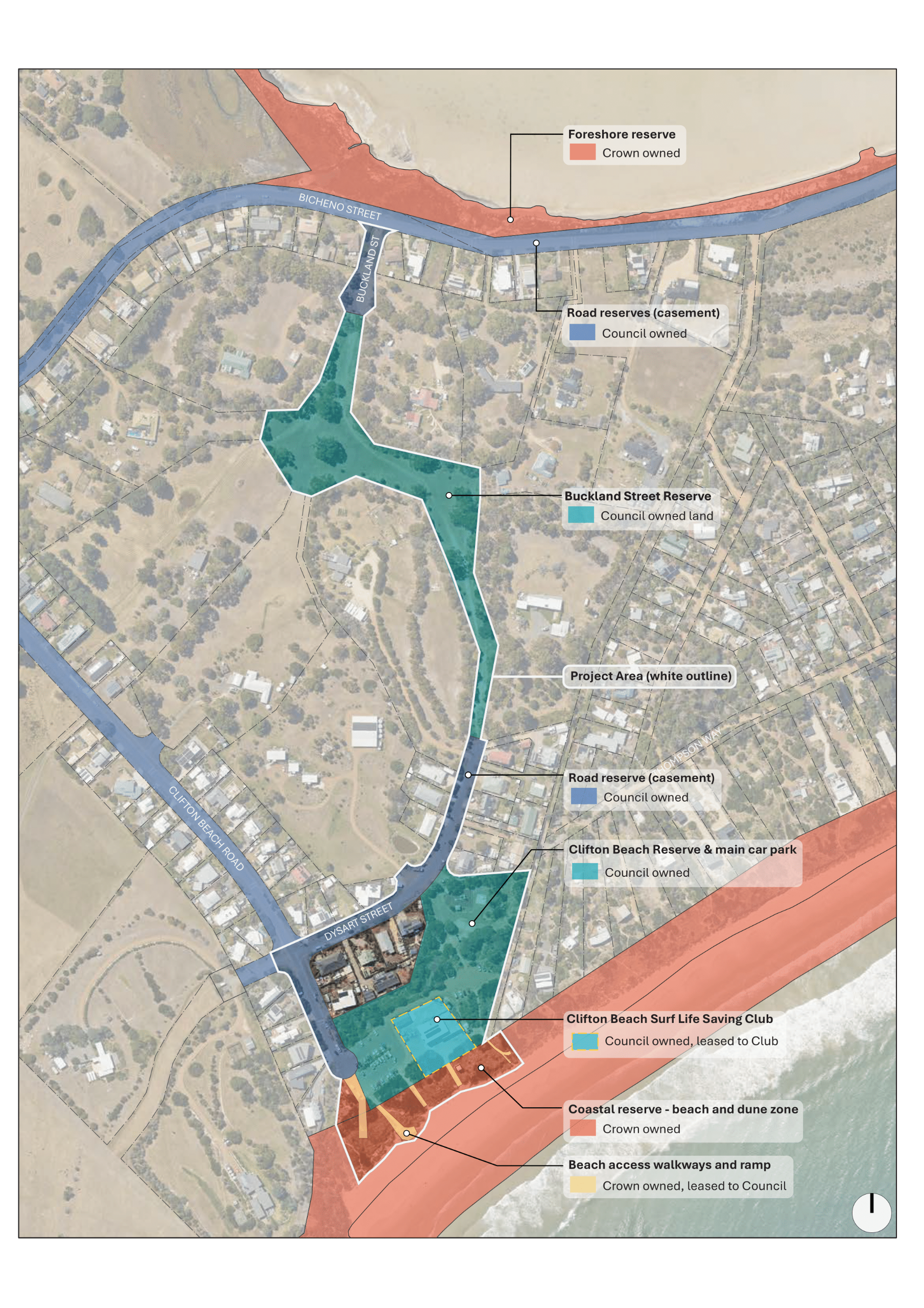
The beach and dune system is Crown Land which is owned and managed by the Tasmanian Government. City of Clarence holds leases to provide four beach access points. We also own the SLSC building and the associated forecourt reserve, which we lease to the SLSC.
This land ownership and approval context is important, because it can affect what changes are possible and what approvals are needed.
What the master plan will look at
The master plan will set a shared long-term vision for Clifton Beach’s public open spaces and coastal reserves and guide future public realm upgrades in a strategic way. It will also set priorities and provide an implementation pathway to help inform budgets and future funding. It will explore things like:
- How the precinct works day-to-day and on busy days (including access, circulation, and safety within the plan area).
- Better connections between key places, including the main car park, beach access points, parks and the Surf Club precinct.
- Protecting the dune and coastal environment, including environmental and cultural values.
- Planning for coastal hazards, like erosion, flooding and sea level rise, and using climate-resilient design principles.
- Beach access solutions that are inclusive and work for pedestrians, vehicles and emergency access.
- What types of facilities are needed, and the best locations for them (including consideration of events and peak-use pressures).
What will shape the options
There are some real constraints and requirements that will shape what’s feasible:
- Crown land approvals and tenure can limit options and influence staging.
- Coastal hazard risks (erosion, inundation and flooding) need to be planned for, so upgrades are resilient and represent good long-term value.
- A sensitive coastal environment and complex tenure mean we need a coordinated approach to guide future investment and deliver high-quality outcomes over time.
What we’ll produce
The Clifton Beach Master Plan is intended to be concept-level, not detailed construction design. It will include:
- A clear vision and guiding principles for the area.
- Concept-level spatial plans showing proposed upgrades, access improvements, public amenities, open space layouts and landscape character.
- A summary of site analysis, opportunities and constraints, and key findings from community and stakeholder engagement.
- An implementation framework with indicative staging, priorities and next steps.
Supporting documents will include an engagement report (at each engagement stage).
What’s out of scope
To be clear, the Clifton Beach Master Plan will not cover everything. Out of scope includes:
- Detailed construction drawings and final building designs.
- Internal or structural design of the Surf Club building (except where interfacing with public realm improvements).
- Buying private land or rezoning proposals.
- Works outside the plan area, including broader walking and cycling links to South Arm (these will be acknowledged, but they sit outside this project).
Documents

There are a number of strategies, plans, and documents which the Clifton Beach Master Plan aligns with and will respond to, including:
Master Plans
Mastering our master plans
What is a master plan?
The approval of a master plan is an important step to progress projects for a place, space, park or sporting venue. It will often bring to life an idea which has been shaped through talking with the community, and gets people excited about what's to come. But sometimes, from the community's perspective, after they've been completed, master plans sit there, and nothing seems to happen quickly. So, what is a master plan, what do they do, and what are they for?
A master plan is a vision for how an area could look in the future. It is not the detailed design you need to start building, instead, it sets the direction for how the area should be developed.
A master plan is created because we want these ideas to come to life one day, but there are many steps to work through before a project can be delivered.
To give an example, last November, the Little Howrah Beach Master Plan was finalised. For Little Howrah Beach to look like the pictures in the plan, several steps must first be taken. Surveys and site assessments need to be completed, detailed landscape plans and building designs drawn up, development applications approved, and hiring a contractor, to name a few. However, the biggest hurdle to complete a project is money and staff resourcing.
Our approximate yearly capital budge for 'passive recreation' projects like Little Howrah Beach sits at around $2.4 million. That sounds like a lot, but this budget also must cover the renewal of existing play grounds, walking paths, and open spaces right across Clarence, as well as the development of any new projects. To give that budget a bit of context, the construction of the Bellerive Beach Park cost around $5 million.

Why create a master plan without the money?
Sometimes developing a master plan can feel like putting the cart before the horse. Even without funding, we need a master plan to guide what happens in an area to avoid development in an uncoordinationed way. However, in order to get the funding required, we need to put together a master plan.
When putting in budget requests each year, or seeking funding from the Tasmanian or Australian Government, the question is always asked, 'what wil the money be used for?'. Having a master plan provides a clear explanation of the project and gives us a much better chance to secure funding.
When we create a master plan, we also speak with the community to get feedback, which raises awareness and expectations about the project. The time between developing a master plan and getting the money to build can be several years, and during this time, it can seem as though not much is happening. However, in the background we are working on detailed designs and seeking various approvals required to deliver elements of the master plan.
A master planning process is a very important step to make sure an area is well planned, properly funded and built in a coordinated way, but they take time. Importantly, master plans are a key consultation tool to ensure our community is engaged with each project and has input into the final outcome.
You can view the Little Howrah Beach Master Plan and other master plans on our website anytime here.


FAQs
FAQ
Have your say!
There are three ways to engage and help us shape Clifton's future. Feel free to contribute to all three or only the ones you want to.
- The survey asks key questions about Clifton in general, the local park and playground and Buckland Reserve.
- Drop a pin on the map to help us capture what you currently like, dislike, or suggest improvements.
- Share stories about your lived experiences and tell us what makes Clifton Beach special to the community.
The feedback provided here and via submissions will be used to draft the Clifton Beach Master Plan that guides all future works in this area.
Survey
Map
Stories
Want all the latest updates on this project?
Follow today and get updates straight to your inbox!